- TRIBE Newsletter
- Posts
- Meet the business consultant who won an Emmy and sold Ferraris
Meet the business consultant who won an Emmy and sold Ferraris
TRIBE Newsletter — January 30th, 2026

Heather Martin
January 30, 2026
Hi founders!
Before we dive into today’s newsletter, a big thank you to our sponsor, OneNine.
We recently partnered with OneNine to design and manage our new website. The results have been phenomenal. We’re loving it and getting a ton of compliments. I met Nathan Ruff, the founder, at one of our retreats. He offered a handful of free hours to show what his team could do. After seeing the first round of work, we were all in. The process was smooth, the team was sharp, and communication was on point.

As a thank you to our community, OneNine is giving away 10 free hours to anyone in my TRIBE who wants to improve their website.
Click here to claim yours.
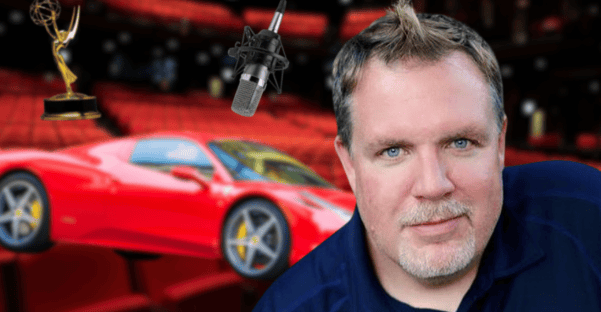
Andrew Safnauer has the kind of resume that sounds fake if you read it too fast.
Radio guy. Emmy winner. Apparel founder. Exotic car operator. Now a strategic advisor.
And the through-line is not “media” or “cars” or “consulting.”
It’s systems. Curiosity. And an obsession with helping leaders make decisions they won’t regret later.
I sat down with Andrew to learn more about how he got here, and all of the crazy stories he’s gathered on the way.
Who are you and what business did you start?
I’m Andrew Safnauer. I live in Fort Mill, South Carolina.
Today I’m a strategic business advisor.
Which sounds fancy, but it’s simple. I help leaders and teams make more confident decisions.
I really leaned into this after being CEO of an exotic vehicle wholesaler in 2024 & 2025.
What’s your backstory? How did you end up here?
After college, I started in radio.
Voiceovers. Audio production. Building commercials. The behind-the-scenes work that keeps stations running.
Like a lot of media people, I moved around to bigger markets.
My last radio job was in Atlanta from 1999 to 2005. I led a creative team for 67 stations in hip hop, which was not my world. But they needed someone who brought systems and organization.
In 2005, I opened my own boutique studio. We moved from Atlanta to Charlotte. I built a creative studio doing audio projects for TV, radio, and corporate clients.
It went well. I won an Emmy. I had fun. Then the entrepreneur itch showed up.
My dad was retired and wanted to open a car dealership, so I helped him.
Around the same time, a friend had an idea for men’s swimwear that solved a real problem. Chafing.
We didn’t know fashion. We didn’t know manufacturing. So we built the network.
We learned overseas production, logistics, design, and how to actually ship a product people wanted. We ran that apparel brand for 11 years and sold it.
Somewhere in there, my fifth-grade daughter had an app idea. So we built an app and launched it on the App Store and Google Play. That part was a disaster, but it added another scar and another lesson.
When you do enough random things, people start asking, “How did you do that?”
So I did coaching and consulting in a loose, ad hoc way.
Then in 2024, an investor group asked me to help build an exotic vehicle wholesaler in South Florida from scratch. We built the warehouse, the team, the sales operation, all of it.
My role ended last July, by choice.
At that point, I was asking the real question. What do I want to do now?
I’m an empty nester. I didn’t want a “job job.”
My sister told me to stop messing around and do consulting full time.
One time in my life, I listened, and here we are.
How did you get your first client?
At first, it was small projects inside my network.
A travel brand. Someone I knew from my media days. A friend who runs a consultancy for compound pharmacists. Just being useful.
My focus was impact. Side note: I use a “one word” theme each year. Last year my word was impact.
So I tried to be impactful for other people and help them move forward.
My first big, real retainer client came from someone I had helped in an ad hoc way about 18 months earlier.
They kept seeing me post ideas on social.
A lot of people lurk. They don’t like posts. They don’t comment. But they watch.
They reached out over Christmas break and said: we want to book you for six months.
That became my first ongoing monthly retainer.
What’s worked best to attract and retain customers?
Relationship building.
That’s how I built my studio too.
I did a little advertising early on, but the engine was always the same.
Put a great product out there. Lead with value. The money follows.
I believe money is the cart, not the horse.
So I don’t do cold outreach the way most people talk about it.
I let my network know what I do.
I’m also good at walking into rooms where I don’t know anyone.
In December, I went to five networking events where I knew zero people. I left each time with four or five solid contacts.
I’m not trying to sell in those rooms. I’m trying to be genuinely interested in someone’s story. People remember that.
How’s the business doing today? What do you want next?
It’s good. Of course I want it to grow faster. Everybody does.
But there are a lot of people offering consulting services.
You have to figure out how to get out in front of the right people.
At this stage of life, impact matters more than the scoreboard.
I’m continuing to learn, grow, and stay curious. The money follows that.
If I had a number, sure, $50K a month would be great. We’re working on it.
Did you ever think it wasn’t going to work?
I don’t go into anything expecting failure.
If you think that way going in, you start steering toward it.
You need a kind of invincibility on the outside, even though every entrepreneur deals with impostor syndrome.
Have I had failures? Yes. The app was an abject disaster.
But failure is still an opportunity to learn.
So no, I don’t enter something thinking it won’t work.
What do outsiders not understand about consulting?
It’s easy to call yourself a consultant.
Anyone can put up a “consulting” shingle.
It’s hard to do it well. The real difference is operator experience.
There’s a gap between someone who installs frameworks and someone who has actually run businesses.
When you’ve operated across industries, you bring pattern recognition. You can say, “This worked in apparel, this worked in media, this worked in automotive.”
Then you adapt it to what the client is dealing with now.
Consulting is easy to get into, but it’s difficult to be great at.
What tools do you use?
I’m bullish on AI, but I’m careful about one thing. I don’t want to outsource my thinking.
It’s easy to abdicate thought leadership to AI. So I use it like an editor, not like the brain.
Claude is on my desktop all day. Gmail. Claude. Constantly.
I also use Canva and a design tool called Love Art.
For presentations, I use Gamma.
For research, I still use Google search, but I’ve also started using Comet from Perplexity.
It cuts out a lot of noise and gets me to what I actually need.
Most influential books and content?
Trillion Dollar Coach is the big one for me. It’s about Bill Campbell, who coached founders at Google and Steve Jobs.
He didn’t come in with “coach speak.” He wasn’t intimidated. He wasn’t trying to be smarter than them.
He just told the truth, clearly, and helped them think. That’s how I try to show up with clients.
I also like The Coaching Habit.
I took a course with Seth Godin, and I’ll read pretty much anything from him.
I also like reading people I disagree with. It breaks my patterns and forces me to see things differently.
Podcast wise, I’ve always loved How I Built This.
And I even listen to a non-business one called A History of Rock Music in 500 Songs. I listen for their storytelling craft.
If you had to start another business today, what would it be?
My wife and I have had an ice cream store concept sitting in Google Drive for eight years.
We built a full plan, even a franchise plan. But I wasn’t ready to hand out ice cream cones for five bucks all day.
If I were to do something new, I’d lean into that.
It’s based on “Vermont creemee,” the higher milk fat style that most people don’t know about.
I’m also a classic car guy, so I’d probably mess with old cars too.
Best advice for entrepreneurs?
Get comfortable with the unknown.
You can see the mountain, but the path is not always clear.
Most entrepreneurs can only see one stone in front of them. You have to be okay not knowing what happens five stones from now.
You’ll hit walls. When some people hit a wall, they turn around.
The ones who win figure out a way over, around, or through it.
It’s not knowing multiple steps ahead. It’s resiliency while you’re building.
Final Takeaways:
Careers can zig-zag, but your skill stack compounds.
Your first real clients usually come from “quiet momentum.” Do good work, stay visible, and trust that lurkers turn into buyers when the timing is right.
Consulting is easy to enter and hard to master. The difference is operator experience, not “knowing frameworks”.
Entrepreneurship is learning to walk in the fog. You can see the mountain, but you only get one stepping stone at a time, and resilience is the whole game.